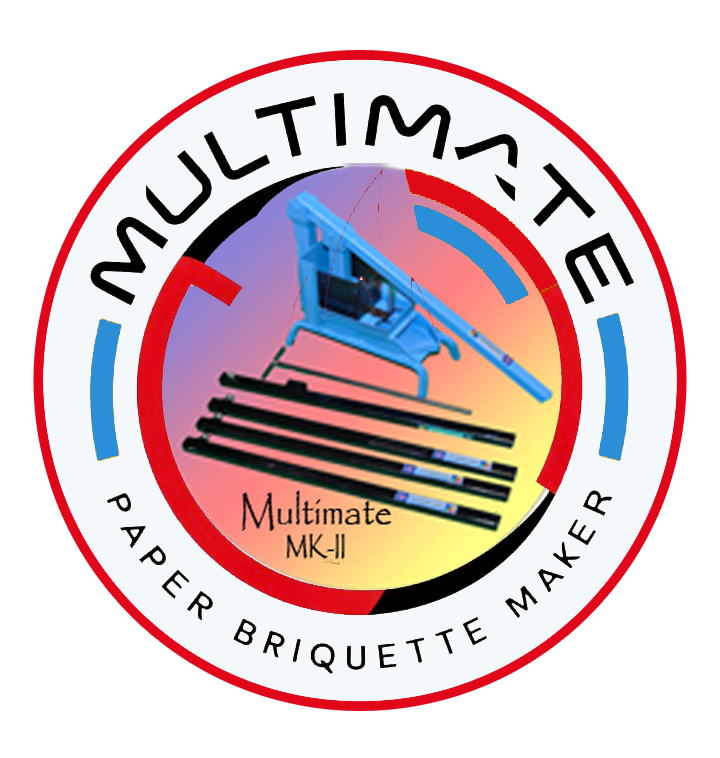
You can see the production of our #Multimate MK-II paper briquette maker
View the rest of the videos 🛠️ How to Build It (Simplified Steps)
1. Build the Frame
Weld a square base using angle iron.
Add vertical supports to hold the compression cylinder upright.
2. Attach the Compression Cylinder
Weld or bolt a steel pipe vertically to the frame.
Drill small holes around the bottom of the pipe to allow water to drain during compression.
3. Make the Plunger
Create a plunger that fits snugly inside the cylinder.
Weld a steel cap or thick disk to the bottom of a solid steel shaft.
Attach the top of the shaft to your lever arm.
4. Install the Lever Mechanism
Mount a steel lever using a hinge or pivot system at the top of the frame.
Connect the lever to the piston shaft (weld, bolt, or clamp).
Ensure you get good leverage to generate pressure with minimal force.
5. Add the Base Plate
Beneath the compression pipe, place a flat steel plate to support the material.
You may want to make this removable for easy cleaning or briquette removal.
6. Add a Drain Tray
Position a tray or bucket below to collect excess water.
🔧 How to Use It
Prepare the Mixture
Use soaked and shredded paper, sawdust, leaves, or other biomass.
Optional: Add a binder like flour, clay, or starch.
Fill the Compression Pipe
Spoon the mixture into the cylinder.
Apply Pressure
Use the lever to press the plunger down with force.
Water will squeeze out via drain holes.
Remove and Dry the Briquette
After compression, remove the briquette carefully.
Air dry or sun dry for 2–7 days depending on thickness and climate.
🧯 Safety Notes
Wear gloves and eye protection when welding.
Ensure the lever mechanism is strong and won’t snap under pressure.
Clean out pulp buildup regularly to prevent rust or contamination.